
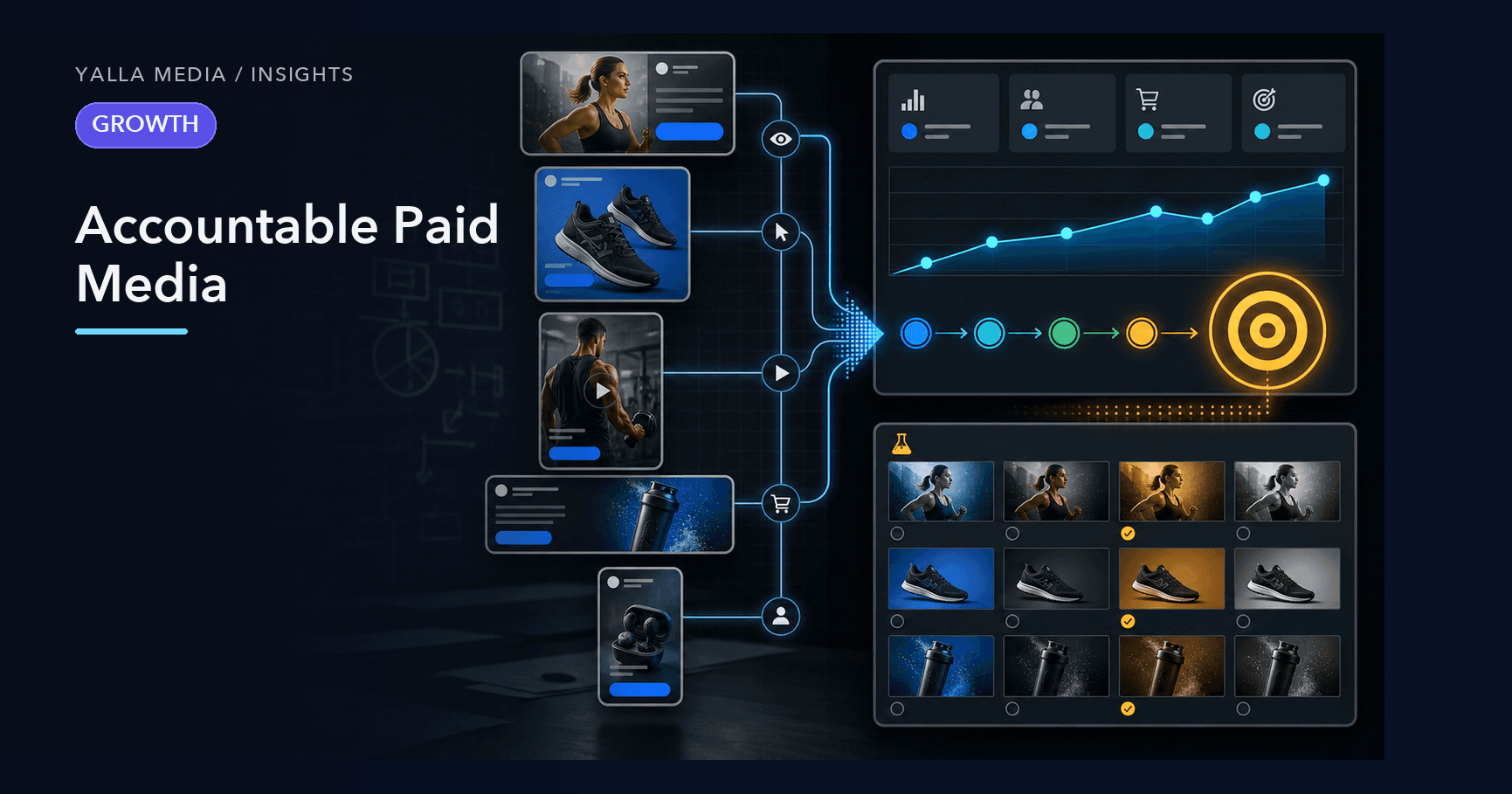
Paid media has a quiet way of becoming unaccountable. Spend ramps, dashboards multiply, and yet the simple question — is this actually working? — gets harder to answer, not easier. The cause is almost always the same: spend has outrun measurement. The fix is a framework that keeps every dollar answerable, built on three pillars that reinforce each other — disciplined creative testing, resilient tracking, and honest, blended measurement.
Accountability here does not mean caution. It means clarity. A clear framework lets you spend more with confidence, because you can see what is returning and what is not. The teams that scale paid media successfully are not the boldest gamblers; they are the ones who turned guessing into knowing.
Pillar one: structured creative testing
Creative is usually the biggest lever in paid performance and the most casually managed. Ads get launched on instinct, judged on vibes, and rotated when someone gets bored. A structured testing program replaces that with a process that actually compounds into learning.
Test to learn, not just to win
The point of a creative test is not only to find a winner — it is to learn why it won, so the next round starts smarter. That requires testing in a way that isolates what you are learning.
- Change one meaningful thing at a time. If you alter the hook, the visual, and the offer at once, a result teaches you nothing about which mattered.
- Form a hypothesis first. State what you expect and why before you run. A test without a hypothesis is just spending to watch numbers move.
- Give it enough room to be real. Judging a creative on a trickle of data is reading tea leaves. Let a test gather enough signal before you call it.
- Keep a library of learnings. Each test should add to a durable record of what works for your audience, so insight accumulates instead of evaporating.
A creative test that produces a winner but no understanding has done half its job. The understanding is the asset — it makes every future test cheaper and sharper.
Pillar two: resilient, server-side tracking
You cannot hold spend accountable to results you cannot measure, and browser-based measurement has grown unreliable. Privacy changes, blockers, and lost signals mean conversions go uncounted — and uncounted conversions make good campaigns look bad and lead you to cut what is actually working.
Server-side tracking is the durable answer. Instead of relying solely on what a browser is willing and able to report, you capture conversion events from your own systems — where you actually know what happened — and pass them along reliably.
What resilient measurement looks like
- Capture events where they truly occur. Record conversions from your own backend, the source of truth, rather than depending only on the browser.
- Send a complete, consistent signal. Feed measurement and ad platforms a fuller picture so optimization is working from reality, not a degraded sample.
- Deduplicate carefully. When events can arrive by more than one path, make sure one conversion is counted once — overcounting is as misleading as undercounting.
- Respect privacy by design. Resilient does not mean invasive. Collect what you need, honor consent, and keep the implementation principled.
Better measurement is not just a reporting upgrade. The platforms optimizing your campaigns are only as smart as the signal you feed them — improve the signal and the automated optimization improves with it.
Pillar three: judge on blended ROAS
The most common measurement mistake is trusting platform-reported return at face value. Each platform, naturally, claims credit for conversions it touched — and when several platforms claim the same conversion, the numbers add up to more truth than exists. Optimize to those figures and you can scale spend while real growth stalls.
Blended ROAS cuts through the credit-claiming. It is the simplest honest question you can ask: across everything you spent, how much revenue came in? Total return over total spend, measured against the business, not the platform.
Why blended is the accountability metric
- It cannot be double-counted. One pool of spend, one pool of revenue. The arithmetic is unforgiving in the best way.
- It ties to reality. It maps to the bank account, not to a platform's self-assessment.
- It exposes incrementality questions. If platform numbers look great but blended return is flat, you have found exactly the problem worth investigating.
Use platform metrics for what they are good at — steering and optimizing inside a channel. Use blended ROAS for the verdict on whether the whole effort is working. The two answer different questions; confusing them is how budgets drift.
The framework in one line
Test creative with discipline so you learn, not just spend. Measure with resilient server-side tracking so your results are real, not a degraded guess. Judge on blended ROAS so the verdict is honest, not flattered. Put those three together and paid media stops being a leap of faith and becomes what it should be — an accountable, scalable engine where every dollar can answer for itself.